
Written by Jason Jobe
How can you achieve more, perform better, and enjoy the experience?
Master the Craft of Collaboration.
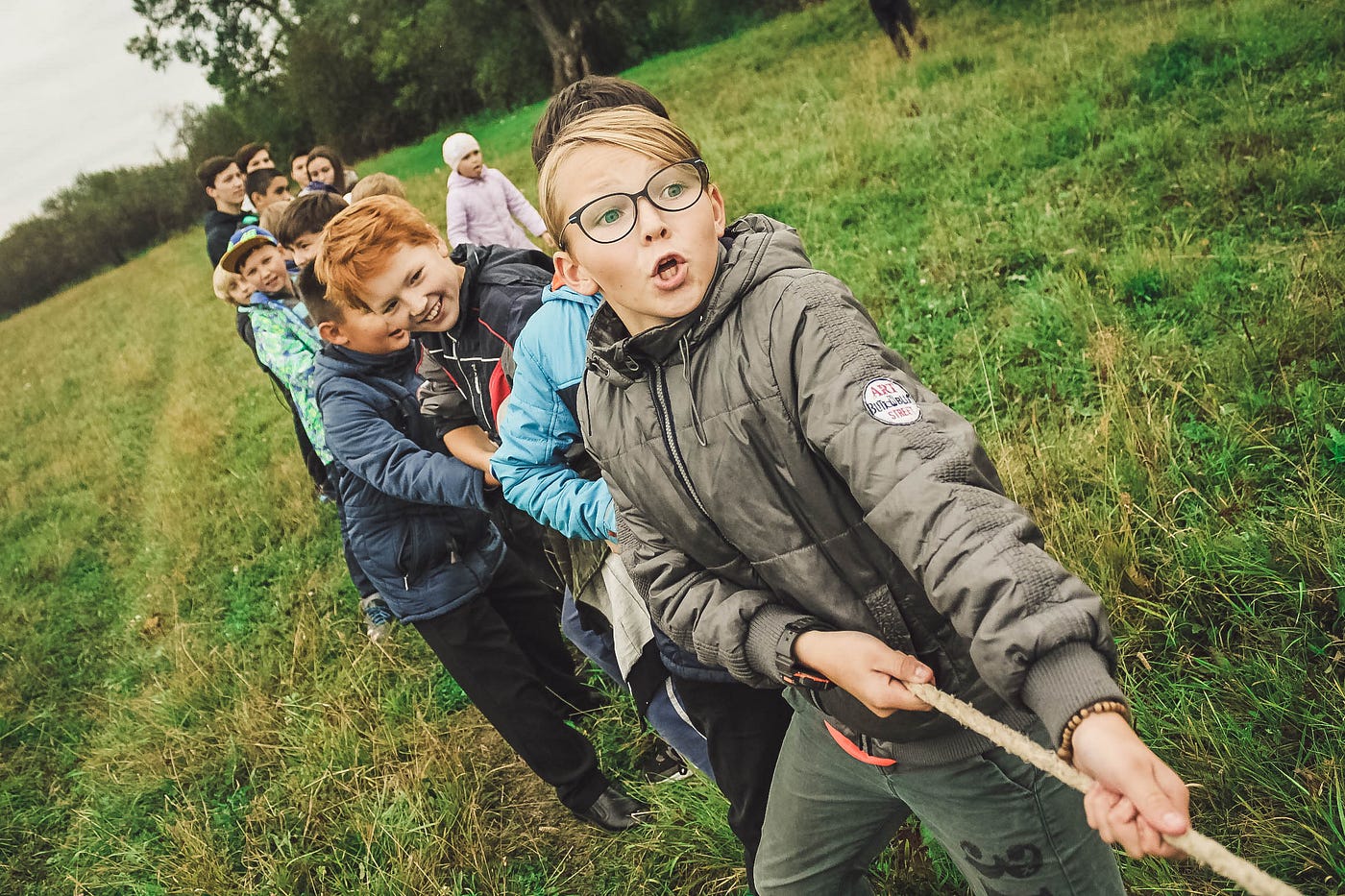
In school, helping each other was often considered cheating. You were required and limited to doing your own work, alone. In the “real world,” working together is not only necessary but with the right people, it can be a more enjoyable, fulfilling, and productive way to work.
By definition, collaboration is a creative, social activity. It is the action of working with others to produce or create something, to achieve a common goal.
Collaborations can include peers and/or those above or below you in skill and expertise, and vary in size, from partnerships, to teams, to companies, to communities, to nations. They can also vary in scope, from short, simple tasks, to growing a company, to a community’s generational journey, and take many forms, such as mentoring, tutoring, coaching, learning, and even play.
Like all relationships, developing and maintaining a collaboration requires effort but it will be rewarding. Acting together, we can be more effective and more productive.
Simply, collaboration is vital to both your personal and professional success.
It is, itself, a valuable skill that you can learn and improve.
“Natural Genius” is a myth.
In his excellent article, ”Why we stopped making Einsteins,” Eric Hoel points out that despite the abundance of educational content available online, there is a surprising scarcity — statistically speaking — of modern-day “geniuses’’ comparable to the likes of Plato, Shakespeare, Isaac Newton, or Albert Einstein.
Genius is not born but nurtured and taught. Hoel contends that many, if not most historical and current day “geniuses,” had the benefit of personal, private tutors in their early education. He cites that the average tutored student does 98% better than non-tutored ones.
He says, (with my emphasis):
“…what’s necessary for genius historically is early engagement with, not access to, intellectual subjects. And, for humans, engagement is a social phenomenon; particularly for children, this requires interactions with adults who can not just give them individual attention, but also model for them what serious intellectual engagement looks like.”
So access to knowledge alone, while empowering and educational, is somehow not fully sufficient in inspiring deep and intensive learning of intellectual and artistic pursuits. Otherwise, the internet would have spawned millions of “geniuses.”
The catalyst that transforms knowledge into mastery is collaboration.
Collaboration with the right person isn’t just an additive boost, it’s a performance multiplier. And honestly, isn’t it much more enjoyable when you have a friend who enjoys something as much as you do? And this “joy” and engagement has a very real, positive impact on your ability, focus, learning, and overall performance.
The value of a good mentor or coach isn’t limited to beginners either. Atul Gawande, the author of “Better” and “The Checklist Manifesto,” himself an esteemed surgeon, at the top of his career, hired a coach to give him feedback on his surgical techniques. While his coach was a peer in terms of expertise, his real value came from having, literally, a different perspective in the operating room.
In his New Yorker article, “Personal Best,”speaking of the advice he received, states,
“That one twenty-minute discussion gave me more to consider and work on
than I’d had in the past five years.”
Peers and Colleagues — Working together works!
It can be great to have (or be) a mentor but don’t underestimate the value of a peer or colleague. Even if you are both beginners, your shared interest and engagement is not only a boost to your morale but it brings very real and significant value to your performance.
In the same article, Gawande cites a five-year study of new skill acquisition in teacher workshops. Normal acquisition rates were under 20% but when coaching was introduced, acquisition rates jumped to over 90%. Simply having a colleague observe and comment as they tried out the new skills in their own classroom made a huge difference.
No Prior Experience Required
On January 26th, 1999, a computer was placed in a “hole in the wall” facing out into an Indian slum at Kalkaji, Delhi where anyone was allowed to freely use it. The results were astonishing. Children came running out of the slum and glued themselves to the computer. Within hours they were surfing the web. With no instructions, with no prior knowledge, they learned quickly to use the computer and internet on their own.
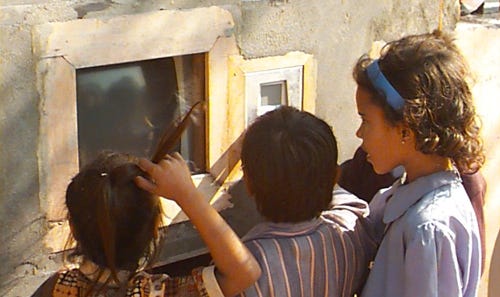
Dr. Sugata Mitra won a $1,000,000 TED award for this ground-breaking work with his Hole-in-The-Wall Education Project (HiWEP). A key, and instructive, observation from this experiment was something unimaginable: these children naturally and excitedly collaborated in their exploration, discovery, and learning.
This prompted Dr. Mitra in his paper “Minimally Invasive Education for mass computer literacy” presented at CRIDALA 2000to propose the following hypothesis:
“The acquisition of basic computing skills by any set of children can be achieved through incidental learning provided the learners are given access to a suitable computing facility, with entertaining and motivating content and some minimal (human) guidance.”
Dr. Mitra has continued his work, creating StartSOLE (Start Self-Organized Learning Environments) and, most recently, he has been named the 2022 Brock Prize in Education Innovation Laureate for his transformational work in rethinking the way children learn.
All this is to say that one’s social environment is a critical element in one’s real, measurable, performance.
Okay. Where do I start?
A good collaboration begins with the “right” people.
This includes you!
Don’t expect others to be what you are not.
One place to begin is to reflect on your own skill and personality traits. Consider taking a personality assessment — 16Personalities.com and PrinciplesYou.com are both free and quite comprehensive.
Remember, while “all models are wrong, some can be useful.” These assessments generalize but they can give you a vocabulary, perspective, and insight into understanding yourself and others. Having a common conceptual scaffolding improves communication and mutual understanding. They don’t have to be perfect to be useful.
So what particular characteristics of the collaborator are most valued?
Is it their expertise, their presentation skills, their enthusiasm, their engagement?
You’re looking for someone who is also interested in becoming a better collaborator. If you need to convince them to be your partner, they aren’t likely to be the motivational force you are looking for.
While we know little about the particulars and talents of those historical tutors, we do have evidence that suggests that engagement itself is highly valuable. One might surmise that it is one’s enthusiasm and ability to communicate, not the knowledge itself that is of greater import.
So give it some thought and talk with some of your friends or colleagues who you think might share your interest in collaboration.
Once you find someone who is game, pick a project (see below for a few ideas) and get started.
Your First Collaboration
- Start with a simple activity with a clear goal.
- Timebox it — having an agreed-upon limit helps you focus and keeps you from over-committing or stretching one another’s patience.
- Talk about your roles in the project.
- Throughout your project keep talking. Share your thoughts.
When you finish, reflect on how it went.
- What was interesting?
- What did you learn?
- What was easy? Hard?
- What would you do “more” of? “Less” of?
To become a better collaborator, think about how you give and accept critiques.
- Avoid simple opinions, especially unsolicited ones. Even a seemingly positive remark can have a negative impact. “This is cool, but…” is not as cool as you think.
- Explain your reasoning underlying your assessment. Be specific.
- Offer and explore comparable alternatives when possible.
- Ask open ended questions to stimulate more reflection and conversation.
- If there is something you found difficult or unsatisfying about your own contribution, ask your fellow collaborator(s) about it. And then listen with an open mind.
- Your feedback should be actionable. In other words, prefer “Perhaps if you tried …” over “That doesn’t work!”
- Focus on working together to help your friend solve their problem.
Remember, this is a skill, a craft. Something that requires practice. The main focus should be on communicating and working together. Your “results” will improve with the journey.
Concluding Remarks
Collaboration is vital to your success in both your personal and professional relationships. And like all relationships, developing and maintaining a collaboration requires effort but it will be rewarding.
Pragmatically, people with an accountability partner are 95% more likely to accomplish their goals and mentors enjoy reduced stress and more meaningfulness in their job.
Successful, positive, and engaging collaboration is driven by a set of social skills that you can learn and improve.
Remember that while expertise can certainly add value it’s not as necessary as you might think.
You may find many of these points and practices strike you as “common sense.” But, of course, “common sense” doesn’t always translate to “common practice.” Like many things, the real value comes from a regular and deliberate practice of the right stuff.
Remember, this is about you becoming a better colleague, a better partner, a better mentor, friend, parent, and a more helpful and optimistic human being.
I know, it’s a big ask!
But improving this skill, even a little, can matter a lot.
Do Try This at Home — Collaborative Projects
- Cooking — Plan and prepare a full course meal.
- – Have an Awkward Dinner Party on Purpose,
Make the World a Better Place
by Stefan Morales | ARCHIPELAGOS | Medium - Build an App, Write a paper. Create a presentation.
- Read and discuss a book together
- Peer Review — Critique / Edit each other’s writings.
- Start a Mastermind Group
Leave a Reply